CMS
1.1 Methodology
Our passion comes forth from a deep curiosity in technology and human interactions, exploring uncharted territories. Shaped by a decade of collaborative community-art initiatives and following the footsteps of mentors, we emphasize deep co-creation and a careful selection of partners and projects. We built upon concepts and technical work that we have crafted for our other platforms and projects, however, we shape new ideas by means of dialogue and collaboration. We focus on refactoring and iterating, making building blocks that allow for endless combinations and updates.
We would be honored to create the great transformation platform, and we believe that we can help push the concepts and realizations into a unique and outstanding experience for visitors, and community members contributing to transforming existing spaces and shaping new ones.
As challenging as this project may be, we know from past projects and experiences that we have the technical and artistic expertise to go beyond, especially since we have the support of exceptional partners. Nevertheless, this project would be the sole priority of the studio activities until the launch. We would like to offer the opportunity to join a substantive discussion with AWB in regards to the concepts, materials and community work and not only the presentation and development.
1.2 One Platform
We are not proposing to build a website, but a web platform that would cater to different actors and have multiple entry points. The initial focus will be on developing the exhibition aspects of the project, which caters to professionals, visitors and the communities. By showcasing a variety of narratives, each subset of users can be informed and inspired.
Furthermore, we provide the functionality of a digital library (knowledge base, archive), by implementing a powerful search function alongside the taxonomy that would provide access to all the content. This could be used as a research tool for professionals, or as an explorative tool for the communities or visitors.
Finally the platform provides additional functionalities based upon whether you are logged in (member) or not, and depending to which community a logged in member belongs. The digital library will have additional functions for logged in members, and the platform will host specific tools and endpoints for collaborative work within the communities or inter-communal activities. The actual scope of the functionality will be the result of workshops and dialogue with AWB and the communities, however, based upon our own experience, we envision at least communication tools (fora, private messaging, links to external services) and planning tools (calendar, with external support).
We might consider allowing visitors to make an account on the platform as well, allowing him to save specific resources and interact with selected member-based activities, such as uploading additional information and/or projects into the online library.
1.3 Content
Content, knowledge base items or media are the result of community-led research or external materials that could contribute to one or more storylines within the exhibitions and community activities.
Basic Media
Text, Image, Video, Audio, (external) link, PDF, file
Advanced Media
Interactive map (clickable graphic with markers) with support for text and audio.
Interactive frame with support for axonometries or other 3D models, providing 3D, 360 video, VR and/or AR experiences
Grouped Media
A cluster of related content, such as an image gallery
Proposed media building blocks
- Media viewer
- Description
- Tags (Taxonomy)
- Related exhibitions
- Related communities / members
- Related activities (internal / external)
- Related other content (further read)
1.4 Taxonomy & Online Library
Since the potential scope of this platform might be spanning a long period in time and host a multitude of actors, there is a need for an optimized content management system.
Therefore, we propose to implement a taxonomy, which will be used for the generative branding, as well as a functional tool for exploration and association.
A tree-based tag system would be maintained through the master CMS - and therefore by a project administrator - and any number of (ending)tags could be attached to a media-element. Our proposed taxonomy system makes use of tags that can have a parent and children, therefore allowing the exploration of larger or very specific subsets of the knowledge base in the online library.
This powerful system can also be put to use to give or shield access to certain visitors (public / private) or communities.
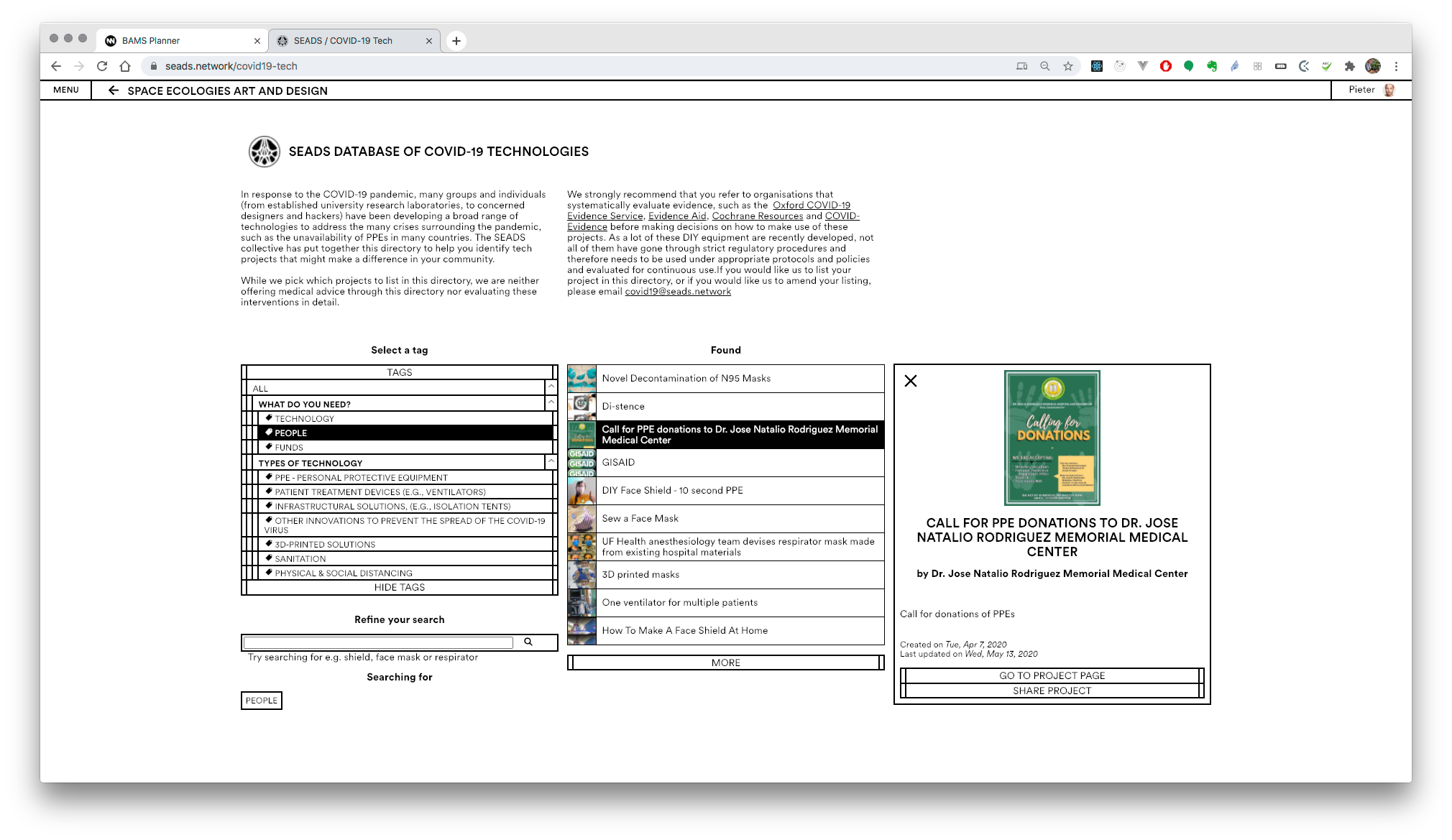
Example of online libraries by AWB
• HereComesTheSun (collection of projects, however without the narrative we envision)
• ExpiExpaExpo (organisers-based, we’d like to curate it more)
• Anthropocene Curriculum (example of how content can be added by the community and thoroughly searched for)
1.5 Exhibition
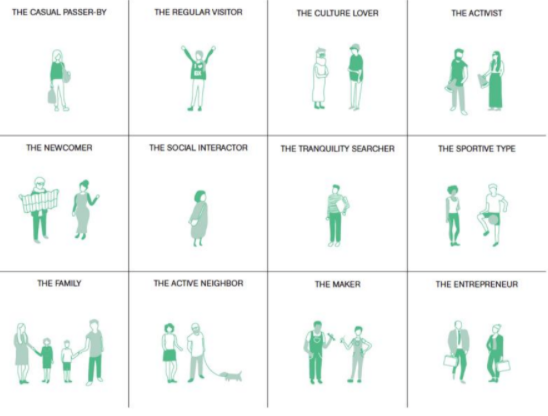
The original documentation of the call highlighted the possibility of using a set of "personas" to create specific guided tours throughout the exhibition. The power of the digital realm is that we can disregard some of the limitations of the physical world, one of them being that we can reuse the same content in different contexts.
Therefore, we propose to build upon this idea of personas, and alter the idea of the artistic component of the website. Instead of using a single exhibition as metaphor, we would like to propose to turn the artistic component of the platform into a digital museum that would host multiple exhibitions at the same time. These different exhibitions could cater towards the same proposed personas, as well as to specific topics. Furthermore this system would allow us to create exhibitions that are being hosted by external curators, specific events, or by specific communities. Finally, we would like to investigate the possibility of having automatically generated exhibitions by means of machine learning or standard statistical analysis.
Furthermore we propose that the selection of materials that make up an exhibtion can be used by themselves as portals to other (related) materials, as such by watching a specific media-element from one exhibition, one has the possibility to explore more in depth information, the scope of an exhibition is therefore simplistic, yet dynamic based upon the choices by the visitor (further read).
An exhibitions look and feel will be generated by the means of their content (using the taxonomy system of the content that makes up the exhibition) and the title.
An exhibition could consist of a mix of the following three views in term of structure:
Standard view
Which could be regarded as a blog like structure: a single column that mixes texts and media.
Timeline view
Text and media are being positioned on the page on both sides of a timeline, breaking a linear view.
Grid view
Text and images are being position in a grid, which can be randomized.
1.6 Community & Members
The great transformation will in addition to an exhibition space also serve as a virtual meeting ground an collaboration space between groups of actors surrounding a particular theme or subject. A key aspect to community management is to provide means of ownership both on the individual level as well as on the different community levels.
Each member has their own page, that lists the projects, exhibitions, communities, media items and personal socials and/or websites that the member is involved with. The member has the possibility to alter their personal information and create new items, and have access to some personal settings. Members have also the possibility to make use of internal tools such as private messaging, fora (topic proposal) or upload new materials (to be reviewed by community administrator and/or AWB).
Members can be part of any number of communities, with a community being led by a group of administrators. Communities have their own page, which lists their projects, exhibitions, members and media items. In addition to a portal to the outside world, the community page will serve as a repository for tools that would support co-creation, such as a community calendar, and access to means of intercommunal communication.
Each community will have access to their respective functionality, however it is upon them to decide certain aspects of the look and feel of their portal / page to the outside world. A community can opt to host their own website, and interact with the platform as an external actor, (https://deltaatelier.eu/).
Community related functionality will be the result of workshops and discussions with AWB and the respective communities.
1.7 Accessibility
This is an important and often overlooked aspect of platform development, however, we should strive for inclusiveness as much as possible.
Some standard practices include:
- Forcing the use of alternative text when using an image or other visual content, this allows visitors with limited visual capabilities to have the text narrated to them (text to speech)
- Provide a text and/or subtitles for content that depends on audio for visitors with limited hearing impairment
- Implement key-board functionality (next, previous) for visitors with limited motor skills
In addition to that we propose the implementation of two layouts. One is the standard layout, which is part of this proposal. It brings together the exhibitions in a distinct unique layout and style. However, we would propose the possibility to enable a simplified lay for visitors with visual impairment, physical disabilities (bigger buttons), are prone to photosensitive seizures (prevent autoplay), cognitive disabilities or limited technological literacy.
The platform would support the use of multiple languages (NL/FR/EN) as well as providing automatic translations in case that content is missing (community created content)
1.8 Additional Functions
Newsletter Subscription
Visitors can subscribe to a general newsletter (curated by AWB) and / or automatic newsletters (based upon categories derived from the taxonomy).
Guided tour option
We strive to make the interface as intuitive as possible, however, we will provide means to explain the navigation and/or toolsets per section of the website, for example on the exhibition space.
Calendar
Showcasing AWB / TGT related activities, as well as community led initiatives and external activities - filterable upon the preference of the visitor. For logged in members, the calendar could also showcase internal activities. The platform will provide a deep integration with exhibitions and media (knowledge base / open library)